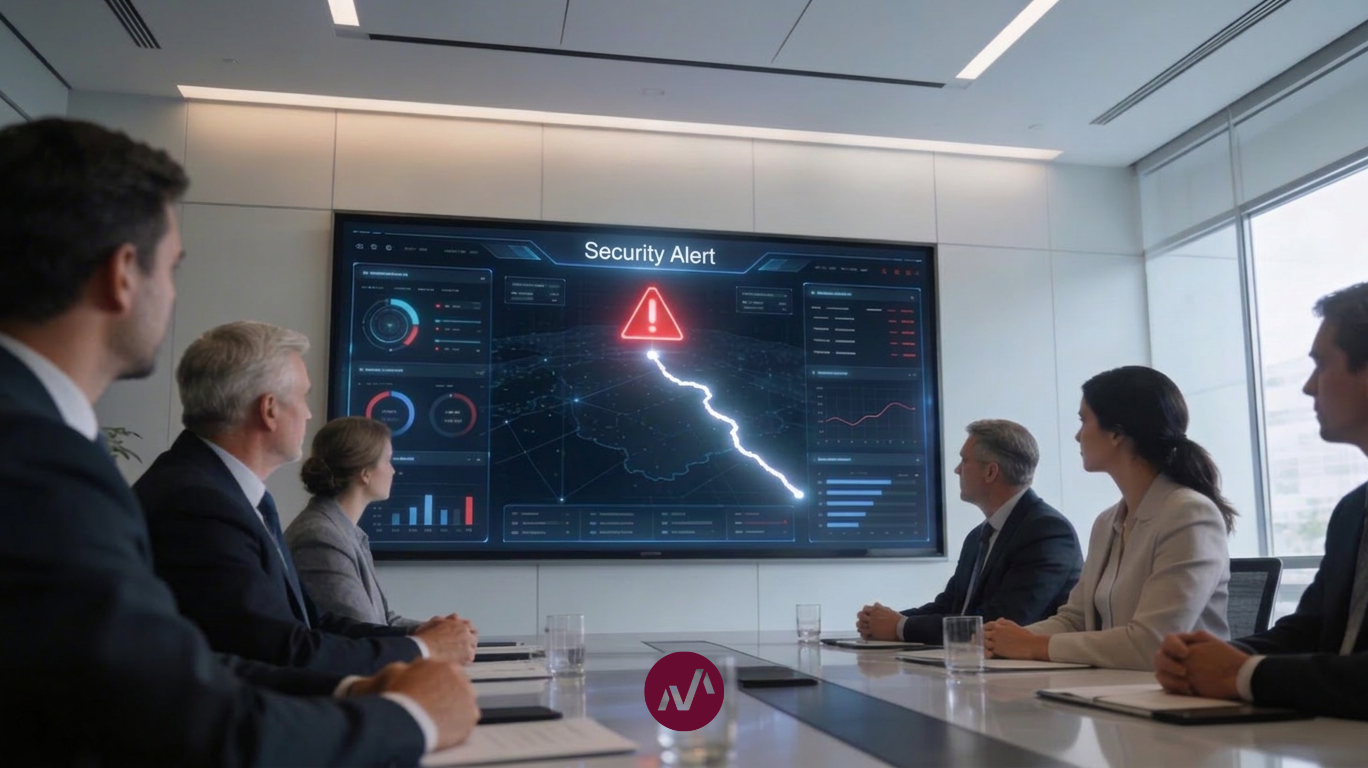
Most organizations still think business cybersecurity is about stopping attacks.
The reality is most incidents aren’t prevented.
They’re detected.
And how fast detection speed happens is what determines impact.
That’s why CISA emphasizes Threat Detection as a core pillar of Zero Trust.
Not just keeping threats out, but identifying and responding to them quickly once they’re inside.
Because today, most attackers don’t break in and immediately cause damage.
They move quietly.
They explore.
They escalate access.
They look for opportunity.
And the longer that goes unnoticed, the more expensive it becomes.
In corporate environments, this doesn’t show up as a “cyber event” first.
It shows up as downtime.
Systems unavailable
Teams unable to work
Revenue delayed
Operations slowed or stopped
That’s where leadership feels it.
Most organizations have invested in prevention. Firewalls, endpoint tools, standard controls. The assumption is if something gets through, it will get caught.
The gap is usually speed.
The gaps in security monitoring that become cybersecurity risk for businesses
When we review environments, the same patterns tend to show up:
- Alerts generated but not consistently reviewed
- No true 24/7 security monitoring
- Unclear escalation paths
- Security tools deployed but not fully tuned
- Limited real-time visibility into activity
Nothing obviously broken.
But not built for cybersecurity incident response.
And that’s where risk builds.
Because the difference between a minor issue and a major business disruption usually comes down to how quickly something is detected and acted on.
This is why the conversation is shifting from can we prevent it to how fast can we respond.
Cybersecurity maturity for leadership and cyber risk management
The more mature organizations treat business cybersecurity the same way they treat operations:
- What’s our exposure per hour of downtime
- How quickly can we identify an issue
- How quickly can we contain it
Those answers tie directly to financial impact.
Lost productivity
Delayed revenue
Customer impact
Pressure on EBITDA
There’s also a practical reality most teams deal with.
Cyber events don’t follow business hours.
A lot of organizations are effectively uncovered outside of 8 to 5.
Which leads to a common situation:
- Something starts overnight
- No one sees it
- By morning, it’s a bigger issue than it needed to be
Not a tooling problem.
A timing problem.
One question leadership teams should be able to answer:
If something abnormal started in your environment at 2:00 AM, how quickly would it be detected and how fast would someone act on it?
That answer usually says more about cybersecurity maturity for leadership than any tool stack.
This is why CISA puts so much emphasis on detection. Strong detection doesn’t just reduce risk.
It limits impact.
If you’re not fully confident in how quickly your organization could detect and respond to a threat, we periodically work with leadership teams on executive cyber risk briefings to help identify where timing, visibility, and response gaps may exist for business in Orlando and across Central Florida.